Introduction
Aviation has always been one of the most safety-focused industries in the world. Every flight involves thousands of complex decisions, advanced aircraft systems, weather conditions, operational procedures, and human coordination. As aviation continues to grow, the industry is adopting advanced technologies to improve safety, reduce risks, and support better decision-making.
AI-Based Flight Safety Monitoring is becoming an important technology that helps airlines, aircraft operators, and aviation professionals analyze large amounts of data to identify potential risks and improve operational safety.
Artificial Intelligence enables aviation systems to monitor aircraft performance, analyze flight patterns, predict maintenance issues, detect unusual situations, and provide valuable insights to pilots and operations teams.
AI does not replace pilots, engineers, or aviation experts. Instead, it works as a decision-support technology that helps professionals make safer and more informed choices.
For aviation students, technology professionals, and future aerospace specialists, understanding AI-based safety monitoring is becoming increasingly important as the industry moves toward smarter and more data-driven operations.
Real-World Examples of AI-Based Flight Safety Monitoring
AI is already being applied across different areas of aviation safety. Some practical examples include:
Predictive Aircraft Maintenance
Aircraft generate large amounts of operational data through sensors and monitoring systems. AI can analyze this information to identify unusual patterns that may indicate possible equipment problems.
For example, AI systems can detect changes in engine performance or aircraft component behavior and help maintenance teams plan inspections before serious failures occur.
Pilot Performance Monitoring
AI systems can analyze flight data, operational patterns, and training information to provide insights into pilot performance.
These insights can support:
- Better training programs
- Improved safety procedures
- Identification of areas requiring additional attention
Weather Risk Detection
Weather conditions can significantly affect flight operations. AI systems can analyze weather data, forecasts, and historical patterns to support better flight planning.
This helps aviation teams understand possible risks related to:
- Severe weather
- Turbulence
- Visibility issues
- Changing atmospheric conditions
Flight Data Analysis
Modern aircraft collect extensive flight information. AI can process this data faster than traditional methods and identify safety trends.
Airlines can use these insights to improve:
- Operational procedures
- Training programs
- Safety management systems
Emergency Situation Support
During unusual situations, AI systems can provide additional information by analyzing available data and helping aviation professionals evaluate possible responses.
Evaluation Criteria for Airlines and Aviation Organizations
Before implementing AI-based flight safety monitoring systems, organizations should consider several important factors.
Data Accuracy and Quality
AI systems depend on reliable information. Aviation organizations should ensure that aircraft sensors, operational records, and safety data are accurate and properly maintained.
Poor-quality data can reduce the effectiveness of AI analysis.
AI Model Reliability
Organizations should evaluate:
- Prediction accuracy
- Alert quality
- System reliability
- Ability to reduce unnecessary warnings
AI systems should provide useful insights rather than create excessive alerts.
Integration With Aviation Systems
AI solutions should work effectively with existing aviation infrastructure, including:
- Aircraft monitoring systems
- Maintenance platforms
- Flight operations systems
- Safety management tools
Security and Data Protection
Aviation data is highly sensitive. Organizations must focus on:
- Cybersecurity protection
- Secure data storage
- Access control
- Responsible data management
Human Decision Support
AI should support aviation professionals rather than replace human expertise.
Pilots, engineers, and safety teams must remain involved in final decisions.
What Is AI-Based Flight Safety Monitoring?
AI-based flight safety monitoring refers to the use of artificial intelligence technologies to collect, analyze, and interpret aviation data for improving safety.
Traditional safety monitoring often depends on manual reviews and historical analysis. AI-based systems introduce faster and more predictive approaches by identifying patterns and possible risks before they become serious problems.
These systems combine:
- Machine learning
- Data analytics
- Aircraft sensor information
- Operational data
- Weather information
- Maintenance records
The goal is to create a smarter safety environment where aviation professionals can make better decisions using data-driven insights.
Why AI Is Important for Flight Safety
Faster Risk Detection
Aircraft operations generate massive amounts of information. AI can analyze this information quickly and identify unusual patterns.
Examples include:
- Unexpected aircraft behavior
- Abnormal system performance
- Operational inconsistencies
Predictive Safety Management
Traditional safety approaches often focus on analyzing problems after they occur.
AI enables predictive safety management by identifying warning signs before failures or risks develop.
Improved Decision Support
Pilots and aviation teams can use AI-generated insights to better understand situations and evaluate possible actions.
Enhanced Operational Efficiency
Safety and efficiency often work together. Better monitoring helps organizations reduce unexpected disruptions and improve planning.
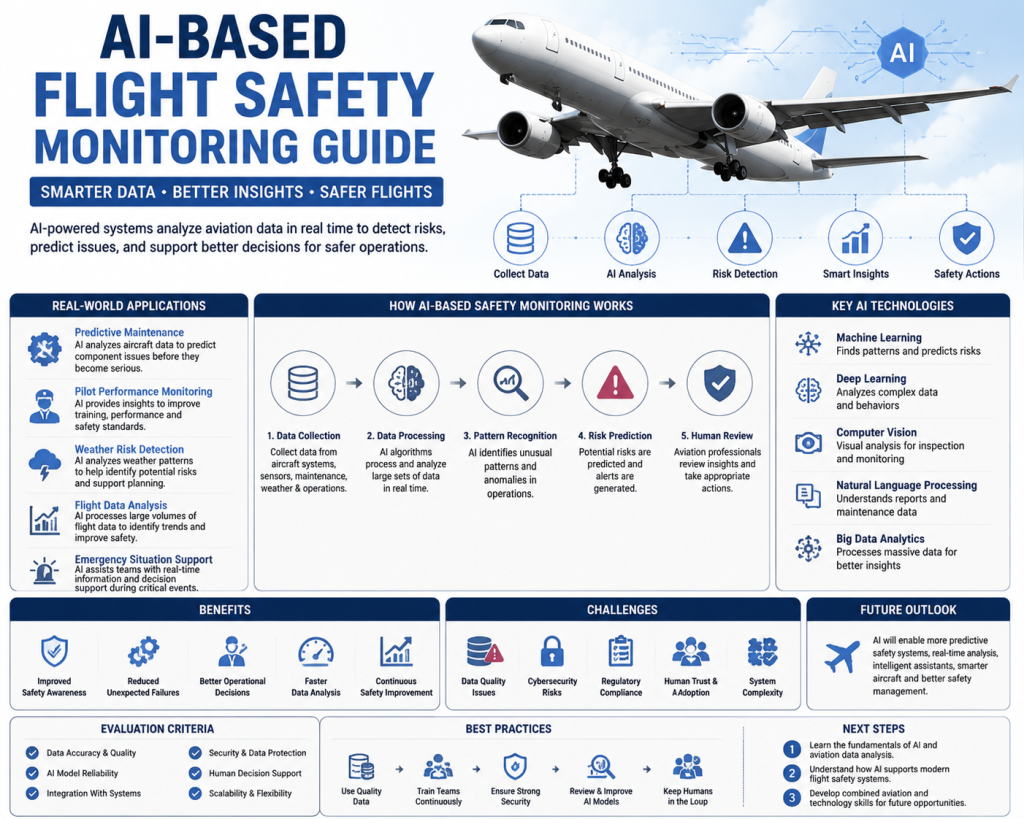
How AI-Based Flight Safety Monitoring Works
Data Collection
AI systems collect information from multiple sources, including:
- Aircraft sensors
- Flight data recorders
- Maintenance reports
- Weather systems
- Operational databases
This information provides a detailed view of aircraft and flight conditions.
Data Processing
After collecting information, AI systems organize and process the data.
Machine learning algorithms analyze patterns and relationships that may not be easily visible through manual review.
Pattern Recognition
AI identifies unusual behavior by comparing current information with previous operational data.
Examples include:
- Changes in engine performance
- Unusual flight patterns
- Repeated operational issues
Risk Prediction
Based on analyzed data, AI systems can provide predictions and alerts that help aviation teams investigate possible risks.
Human Review and Action
AI recommendations are reviewed by qualified aviation professionals who make final operational decisions.
Human expertise remains essential in aviation safety.
Key AI Technologies Used in Flight Safety Monitoring
Machine Learning
Machine learning allows AI systems to learn from aviation data and identify patterns.
Applications include:
- Predictive maintenance
- Risk analysis
- Flight performance monitoring
Deep Learning
Deep learning uses advanced neural network models to analyze complex information.
Applications include:
- Large-scale flight data analysis
- Image recognition
- Complex operational predictions
Computer Vision
Computer vision allows AI systems to analyze visual information.
Aviation applications include:
- Aircraft inspection
- Runway monitoring
- Airport safety observation
Natural Language Processing
Natural Language Processing helps AI understand written aviation information.
Applications include:
- Maintenance report analysis
- Safety document review
- Operational report processing
Big Data Analytics
Aviation produces enormous amounts of information. Big data analytics allows organizations to process and understand this information efficiently.
Applications include:
- Safety trend identification
- Performance analysis
- Operational improvement
AI Applications in Aviation Safety Monitoring
Predictive Maintenance
Predictive maintenance is one of the most important AI applications in aviation.
AI analyzes aircraft data to identify possible component issues before they become major problems.
Benefits include:
- Better maintenance planning
- Reduced unexpected failures
- Improved aircraft availability
Flight Risk Assessment
AI systems can evaluate operational information to identify possible safety concerns.
They can analyze:
- Flight patterns
- Weather information
- Aircraft conditions
- Operational factors
Pilot Assistance Systems
AI can support pilots by providing additional information and insights.
Applications include:
- Decision support
- Performance analysis
- Training improvement
AI assists pilots but does not replace their judgment.
Air Traffic Safety Support
AI can support air traffic management by analyzing traffic patterns and identifying possible congestion or operational challenges.
Benefits include:
- Better traffic management
- Improved coordination
- Enhanced safety awareness
Airport Safety Monitoring
Airports can use AI for:
- Runway monitoring
- Ground operation analysis
- Safety inspections
- Equipment monitoring
AI helps improve safety across airport environments.
Benefits of AI-Based Flight Safety Monitoring
Improved Safety Awareness
AI provides deeper visibility into aviation operations by analyzing large amounts of information.
Reduced Unexpected Failures
Predictive analysis helps organizations identify possible problems earlier.
Better Operational Decisions
Aviation teams can use AI insights to improve planning and response strategies.
Faster Data Analysis
AI can process information faster than traditional manual methods.
Continuous Safety Improvement
AI systems allow organizations to learn from operational data and improve safety practices.
Challenges of Implementing AI in Aviation Safety
Data Quality Issues
AI performance depends on accurate and complete data.
Incorrect or incomplete information may affect results.
Cybersecurity Risks
Connected aviation systems require strong security measures to protect sensitive information.
Regulatory Compliance
Aviation organizations must ensure AI applications follow safety regulations and industry standards.
Human Trust and Adoption
Aviation professionals need confidence in AI recommendations before fully integrating these systems.
System Complexity
Integrating AI with existing aviation infrastructure can require significant planning and technical expertise.
Future of AI in Flight Safety Monitoring
AI will continue to influence the future of aviation safety.
Potential developments include:
Advanced Predictive Safety Systems
Future AI systems may provide more accurate risk forecasting.
Real-Time Safety Analysis
AI may enable faster analysis of operational situations.
Intelligent Aviation Assistants
AI-powered assistants may provide additional support to pilots and aviation teams.
Smarter Aircraft Systems
Aircraft may become increasingly capable of monitoring and reporting operational conditions.
Improved Safety Management
AI will continue helping aviation organizations identify improvements through data analysis.
How Aviation Professionals Can Prepare for AI-Based Safety Systems
Future aviation professionals should develop knowledge in both aviation and technology.
Important skills include:
Understanding AI Fundamentals
Learn basic concepts of:
- Machine learning
- Data analysis
- Artificial intelligence applications
Learning Aviation Data Analytics
Understand how aviation data is collected, processed, and used.
Following Aviation Technology Trends
Stay updated with developments in:
- Smart aircraft systems
- Aviation automation
- Digital safety tools
Combining Aviation Knowledge With Technology Skills
Professionals with both aviation expertise and technology understanding will be valuable in future aviation environments.
Common Mistakes Organizations Should Avoid
Implementing AI Without Quality Data
AI systems require reliable information to provide useful results.
Replacing Human Expertise Completely
Aviation safety requires human judgment and professional experience.
Ignoring Cybersecurity
Protecting aviation systems and information should remain a priority.
Using Outdated AI Models
AI systems require regular improvement and evaluation.
Failing to Train Employees
Teams need proper understanding of AI tools and their limitations.
Frequently Asked Questions
1. What is AI-based flight safety monitoring?
AI-based flight safety monitoring uses artificial intelligence technologies to analyze aviation data and identify possible safety risks.
2. How does AI improve aviation safety?
AI improves safety by detecting patterns, predicting risks, analyzing data, and supporting better decisions.
3. Can AI predict aircraft failures?
AI can analyze aircraft data to identify possible warning signs that may help maintenance teams take preventive action.
4. How does AI analyze flight data?
AI uses machine learning algorithms to process information from aircraft systems, operational records, and other aviation sources.
5. Can AI replace pilots in safety decisions?
No. AI supports pilots and aviation professionals but does not replace human judgment.
6. What technologies are used in AI aviation safety systems?
Common technologies include machine learning, deep learning, computer vision, natural language processing, and big data analytics.
7. How do airlines use AI for predictive maintenance?
Airlines use AI to analyze aircraft performance data and identify possible maintenance needs before major issues occur.
8. What are the challenges of AI implementation in aviation?
Challenges include data quality, cybersecurity, regulatory requirements, system integration, and human adoption.
9. Is AI-based safety monitoring approved for aviation use?
AI applications in aviation must meet applicable aviation regulations and safety requirements before operational use.
10. What skills are needed to work with AI aviation systems?
Professionals benefit from knowledge of aviation operations, data analytics, artificial intelligence, and safety management principles.
Conclusion
AI-based flight safety monitoring represents an important advancement in modern aviation technology. By analyzing large amounts of aviation data, AI helps identify risks, support predictive maintenance, improve decision-making, and strengthen safety management systems.
However, aviation safety will always depend on the combination of advanced technology and human expertise. AI works best as a supporting tool that helps pilots, engineers, and aviation professionals make better decisions.
As aviation continues to evolve, professionals who understand both artificial intelligence and aviation operations will play an important role in building safer and smarter flight systems.