Introduction
Artificial Intelligence is transforming aviation training in a major way. Traditional pilot training relied heavily on classroom learning, manual simulator practice, and instructor-led evaluations. Today, AI is adding a new layer of intelligence that makes training more adaptive, data-driven, and efficient.
AI does not replace pilot instructors or real flight experience. Instead, it enhances the learning process by providing real-time feedback, realistic simulations, and personalized training paths. For student pilots and cadets, understanding how AI is used in pilot training is becoming essential for preparing for the future of aviation.
What is AI in Pilot Training?
AI in pilot training refers to the use of intelligent systems and machine learning technologies to improve how pilots learn flying skills, decision-making, and aircraft handling.
Core Idea
AI helps analyze trainee performance, simulate real-world flight conditions, and provide personalized feedback to improve learning outcomes.
Key Features
- Smart flight simulators that react dynamically
- Performance tracking systems for trainees
- Adaptive learning modules based on skill level
- AI-based feedback during and after simulation sessions
In simple terms, AI makes pilot training more precise, realistic, and personalized.
How AI is Used in Pilot Training
AI is now an important part of modern aviation training programs.
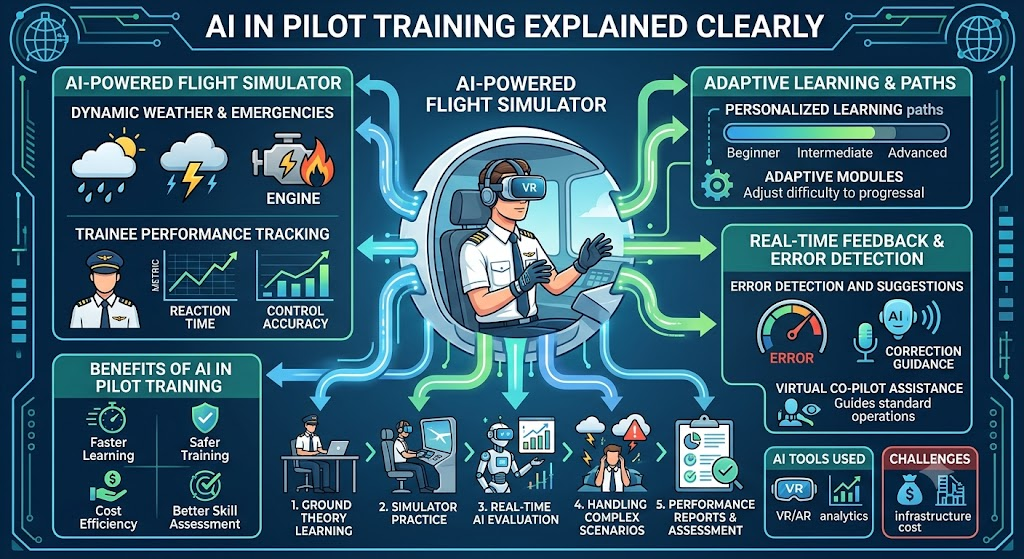
1. AI-Powered Flight Simulators
AI creates realistic flying environments including weather changes, turbulence, and emergency situations to prepare trainees for real-world conditions.
2. Real-Time Performance Monitoring
AI tracks pilot actions such as reaction time, control accuracy, and decision-making during simulations.
3. Error Detection and Correction
AI identifies mistakes during training sessions and provides suggestions for improvement.
4. Virtual Co-Pilot Assistance
AI acts as a digital co-pilot, guiding trainees through procedures and helping them learn standard operations.
5. Scenario-Based Training
AI generates complex flight scenarios such as engine failure, weather emergencies, and navigation challenges.
Benefits of AI in Pilot Training
AI brings several important advantages to aviation training programs.
Faster Learning
Students can learn complex skills more quickly with instant feedback.
Safer Training Environment
AI allows trainees to practice emergency situations without real-world risk.
Personalized Training
Each pilot receives a learning experience based on their performance level.
Cost Efficiency
Reduces the need for excessive aircraft usage and fuel consumption during training.
Better Skill Assessment
Performance evaluation becomes more accurate and data-driven.
AI Tools Used in Pilot Training
Modern pilot training uses a variety of AI-powered tools and systems.
- Advanced AI-based flight simulators
- Machine learning performance evaluation software
- Aviation data analytics platforms
- Virtual Reality (VR) and Augmented Reality (AR) training systems
- Cloud-based aviation training environments
These tools make pilot training more immersive and effective.
Step-by-Step AI Training Process for Pilots
Step 1: Ground Theory Learning
Students begin with basic aviation theory supported by AI-based learning modules.
Step 2: Simulator Training
AI-powered simulators provide realistic flight conditions for practice.
Step 3: Real-Time Feedback Sessions
AI evaluates trainee performance and provides correction guidance.
Step 4: Advanced Flight Scenarios
Trainees handle complex situations like emergencies and weather challenges.
Step 5: Performance Evaluation
AI generates detailed reports highlighting strengths and improvement areas.
Challenges of AI in Pilot Training
While AI improves training, it also comes with challenges:
- High cost of advanced training systems
- Need for technical infrastructure and maintenance
- Learning curve for instructors and trainees
- Dependence on digital systems and software reliability
Despite these challenges, adoption is increasing rapidly in aviation academies worldwide.
Future of AI in Pilot Training
The future of pilot training will be strongly influenced by Artificial Intelligence.
Key Developments Expected:
- Fully AI-powered intelligent simulators
- Virtual instructors assisting human trainers
- Personalized AI-driven learning systems
- Cloud-based global training environments
- More realistic autonomous training simulations
These advancements will make pilot training more efficient, standardized, and globally accessible.
Frequently Asked Questions (FAQs)
1. What is AI in pilot training?
AI in pilot training refers to using intelligent systems to improve how pilots learn flying skills and decision-making through simulations and data analysis.
2. How does AI help student pilots?
AI provides real-time feedback, realistic training scenarios, and performance analysis to improve learning outcomes.
3. Does AI replace flight instructors?
No, AI supports instructors by enhancing training but does not replace human teaching.
4. What are AI flight simulators?
They are advanced systems that use AI to create realistic flying environments and training scenarios.
5. Why is AI important in pilot training?
It improves safety, reduces training time, and provides personalized learning experiences.
6. Is AI-based pilot training expensive?
Yes, advanced systems can be costly, but they reduce long-term training expenses.
7. Can AI predict pilot performance?
Yes, AI can analyze training data to identify strengths and improvement areas.
8. What skills are needed for AI-based pilot training?
Basic digital literacy, adaptability, and understanding of aviation systems are important.
9. Is AI used in real flight training schools?
Yes, many modern aviation academies are adopting AI-powered training systems.
10. What is the future of AI in pilot training?
The future includes virtual instructors, smart simulators, and fully AI-assisted training environments.
Conclusion
AI is reshaping pilot training by making it more advanced, efficient, and personalized. From intelligent simulators to real-time performance analysis, Artificial Intelligence is helping future pilots develop stronger skills in a controlled and realistic environment.
While traditional training methods remain essential, AI adds significant value by improving accuracy, safety, and learning speed. For student pilots and aviation trainees, adapting to these technologies is important for staying competitive in the evolving aviation industry.
The future of pilot training will be a balanced combination of human expertise and intelligent systems, ensuring better-prepared and more confident pilots for the aviation industry.