Introduction
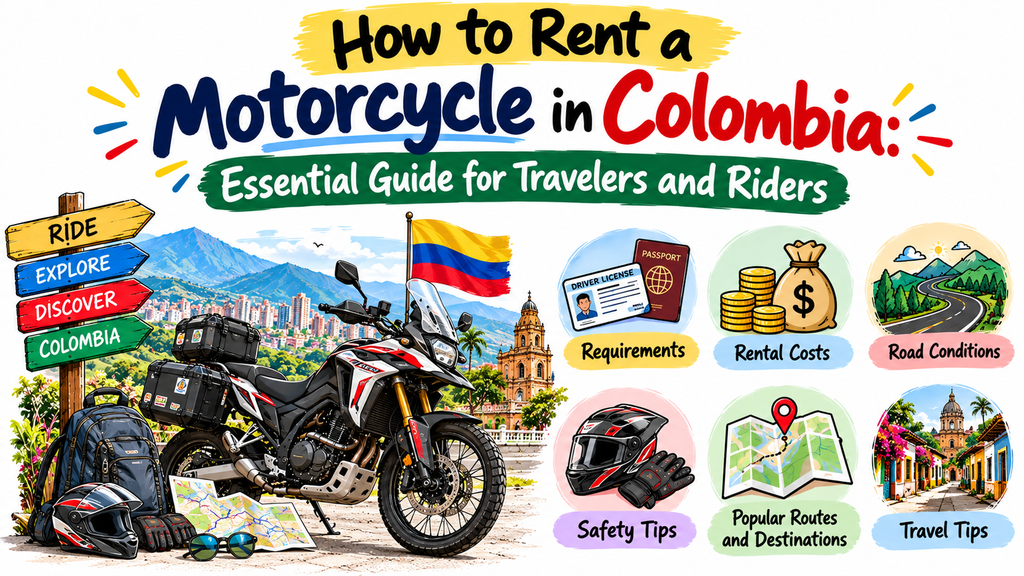
Renting a motorcycle is one of the most exciting ways to explore Colombia. From winding mountain passes in the Andes to coastal routes along the Caribbean, two wheels offer a freedom that cars and buses simply cannot match. However, renting a vehicle in a foreign country requires careful preparation. Riders must understand local traffic laws, choose the right machine for challenging terrain, and navigate insurance policies correctly. This guide covers everything you need to know before you rent a motorcycle in Colombia. You will learn about licence requirements, bike selection, safety tips, common rental mistakes, and how to plan a smooth journey. Whether you plan to navigate the bustling streets of Medellín or embark on an extended cross-country road trip, proper preparation ensures a safe and memorable adventure.
Choosing the Right Motorcycle for Colombian Roads
Selecting the right motorcycle is the most important decision you will make before your trip. Colombian geography is diverse, featuring steep mountain climbs, unpaved rural roads, heavy city traffic, and fast highways. Matching your bike to your skill level and planned route keeps you safe and comfortable.
City Scooters and Small Displacement Bikes
Scooters and small-displacement motorcycles work well for urban exploration. If you plan to stay within city limits like Bogotá, Medellín, or Cartagena, a scooter or a lightweight 125cc to 150cc motorcycle offers excellent fuel economy and easy maneuverability. These machines let you slip through traffic jams and find parking spaces easily. However, small engines lack the power needed for steep mountain highways or sustained high-speed riding with luggage.
Adventure and Touring Motorcycles
Long-distance travel across Colombian mountain ranges demands a different machine. Dual-sport and adventure motorcycles ranging from 250cc to 650cc or higher are popular choices for cross-country trips. These bikes offer higher ground clearance, stronger suspension, and enough power to handle steep inclines and passing maneuvers on rural roads. Choose a motorcycle that matches your physical size and off-road riding experience. A heavy adventure bike can be difficult to manage for inexperienced riders on gravel or wet surfaces.
Motorcycle Category Comparison
| Motorcycle Type | Engine Size | Ideal Travel Environment | Key Advantages | Considerations |
| Scooter | 100cc – 150cc | City streets & local commuting | Easy to park, light, fuel-efficient | Limited power on mountain climbs |
| Light Dual-Sport | 150cc – 250cc | Mixed pavement & light unpaved roads | Agile, handles rough terrain easily | Lower top speed on major highways |
| Adventure / Touring | 300cc – 650cc+ | Long-distance, mountains & highways | High power, comfortable, handles luggage | Heavier weight, requires higher rider skill |
Driving Licences and Legal Requirements in Colombia
Before you book a rental, you must confirm that you meet all legal requirements to drive in Colombia. Traffic authorities enforce strict regulations, and riding without proper documentation can lead to heavy fines or vehicle impoundment.
International Visitors and Foreign Licences
Foreign visitors can generally drive in Colombia using their home country driver licence, provided the licence is valid and written in the Roman alphabet. If your home licence uses a different alphabet, you will need an International Driving Permit alongside your original document. Rental providers and local traffic police check these documents carefully. You must also ensure your licence covers the specific engine displacement of the motorcycle you rent.
Essential Vehicle Documents
Every motorcycle operating legally in Colombia must carry specific paperwork. The rental provider should supply copies of the vehicle registration card, known as the tarjeta de propiedad, and proof of mandatory traffic accident insurance, known as SOAT. Always check that these documents are present in the storage compartment before you leave the rental location. Carrying expired paperwork can cause severe delays if you encounter police checkpoints along your route.
Understanding Rental Costs, Insurance, and Deposits
Budgeting for a motorcycle rental involves more than just the daily base rate. Understanding how fees, insurance, and deposits work prevents unexpected expenses during your trip.
What is Included in the Base Rate
The advertised daily rental rate usually covers the use of the motorcycle, basic liability insurance, and sometimes a helmet. However, policies vary significantly between providers. Always ask what is included in the price. Some companies charge separate fees for additional riders, panniers, phone mounts, or extra safety gear. Clarify these details in writing before you sign any agreement.
Security Deposits and Deductibles
Rental providers require a security deposit to cover potential damage, traffic fines, or loss. This deposit is usually held on a credit card or taken as a temporary authorization. In addition to the deposit, understand the insurance deductible. If the motorcycle sustains damage or gets stolen, you are typically responsible for paying up to the deductible amount. Read the insurance fine print carefully to understand your financial liability in different scenarios.
Preparing for Your Colombian Motorcycle Road Trip
Riding in Colombia is vastly different from driving in North America or Europe. Road conditions, traffic patterns, and weather require constant vigilance and careful planning.
Route Planning and Mountain Driving
Distances in Colombia can be deceiving. Mountain roads feature tight switchbacks, steep grades, and frequent roadworks. A journey that looks short on a map can take twice as long as expected. Plan conservative daily distances and aim to arrive at your destination before dark. Night riding is generally discouraged due to unlit roads, stray animals, unexpected potholes, and limited visibility.
Essential Gear and Safety Equipment
Never compromise on safety equipment. While a basic helmet is often included with the rental, many experienced riders prefer bringing their own certified helmet for better fit and protection. Wear sturdy riding boots, long pants, a durable jacket, and gloves. Sudden rainstorms are common in many regions, so pack waterproof gear or keep a reliable rain suit easily accessible in your luggage.
Vehicle Inspection and Return Procedures
A thorough vehicle inspection protects you from being blamed for pre-existing damage when you return the motorcycle.
Before you ride away, inspect the machine carefully in daylight. Check the tires for adequate tread depth, test both brakes, ensure all lights and turn signals function correctly, and check the chain tension and oil levels. Take clear photographs and videos of every scratch, dent, or scuff mark from multiple angles. Make sure the rental agent notes any existing damage on the check-out form and signs it. When returning the vehicle, allow extra time for the agent to inspect the bike and release your security deposit authorization.
Common Mistakes to Avoid
- Choosing a motorcycle that is too powerful or heavy for your actual riding experience, especially when tackling steep mountain passes.
- Assuming a foreign driver licence is accepted without checking if an International Driving Permit is also required.
- Ignoring insurance exclusions, such as riding on unpaved roads or operating outside designated geographical zones.
- Overlooking the security deposit amount and how it affects available credit on your card during the trip.
- Failing to inspect the motorcycle thoroughly and document pre-existing scratches or mechanical issues before departure.
- Forgetting to check local weather forecasts and road conditions before setting off on a long mountain journey.
- Underestimating travel times on winding Andean roads and attempting to ride after dark.
- Neglecting to confirm fuel policies, such as whether you must return the tank full or pay a refueling fee.
- Signing a rental agreement without reading the cancellation rules and extra fee schedules.
- Traveling without a waterproof bag or proper rain gear during the rainy season.
Important Considerations
Renting a vehicle in Colombia involves several factors that can shift your plans. Legal eligibility, personal riding skill, and changing weather patterns demand respect. Mountainous terrain can turn a pleasant afternoon ride into a challenging test of focus if heavy rain or fog rolls in. Furthermore, rental availability fluctuates based on tourism seasons, holidays, and regional festivals. Travelers looking to compare different vehicle options can explore available choices through online marketplaces like motoshare.co, which connect riders with local rental providers across Colombia. Always verify provider-specific policies, emergency support numbers, and breakdown procedures before you finalize your booking.
Frequently Asked Questions (FAQs)
1. Do I need an International Driving Permit to rent a motorcycle in Colombia?
If your domestic driver licence is written in the Roman alphabet and remains valid, you can usually use it alone. However, many authorities and rental providers recommend carrying an International Driving Permit as an official translation to avoid misunderstandings during police stops.
2. What is the minimum age requirement to rent a motorcycle in Colombia?
Most rental providers require drivers to be at least 21 years old. Some companies set the minimum age at 23 or 25, particularly for larger adventure motorcycles or high-powered touring bikes. Always check the specific age policy of your chosen provider.
3. What type of insurance is mandatory for rental motorcycles?
All legal vehicles in Colombia must carry SOAT, which is mandatory traffic accident insurance covering medical expenses for injured parties. Rental agreements also include basic third-party liability or collision coverage, though optional upgrades are often available to reduce your financial deductible.
4. How much should I expect to pay for a motorcycle rental?
Rental prices vary depending on the engine size, vehicle brand, rental duration, and city. Small scooters or entry-level bikes cost less per day, while specialized adventure touring motorcycles carry higher daily rates. Long-term rentals often qualify for discounted weekly or monthly rates.
5. Can I ride a rental motorcycle across different Colombian cities?
Many rental providers permit intercity travel, but you must inform them of your planned route beforehand. Some companies restrict travel to specific departments or prohibit crossing international borders into neighboring countries like Ecuador or Venezuela.
6. What happens if the motorcycle breaks down during my trip?
Reputable rental companies provide emergency roadside assistance or instructions on what to do if mechanical trouble occurs. Always ask for emergency contact numbers and verify whether the provider offers a replacement bike or towing services if a breakdown happens in a remote area.
7. Are helmets and riding gear provided with the rental?
Most rentals include at least one basic safety helmet. However, jackets, gloves, and knee guards are rarely included as standard items. You should inquire about available gear or bring your own equipment to ensure proper fit and safety standards.
8. What is the fuel policy for motorcycle rentals in Colombia?
The standard policy requires you to pick up the motorcycle with a full tank of fuel and return it completely full. If you return the bike with less fuel, the rental company will charge a refueling fee that is often higher than local gas station prices.
9. Is it safe to ride a motorcycle at night in Colombia?
Riding after dark is strongly discouraged. Rural highways lack street lighting, and you face increased risks from unlit vehicles, potholes, road debris, and stray animals. Plan your daily itineraries to reach your accommodation well before sunset.
10. Can two people comfortably ride on a standard rental scooter?
Smaller scooters can carry two people for short urban trips, but they struggle on steep hills with a dual load. If you plan to ride with a passenger and luggage on mountain roads, choose a motorcycle with a larger engine displacement of at least 250cc.
11. What deposit is required when renting a motorcycle?
Rental companies require a security deposit to cover potential damage or traffic fines. This is typically placed as a temporary hold on a credit card. The deposit amount varies depending on the value of the motorcycle and the provider’s insurance terms.
12. How do I handle toll roads on a motorcycle in Colombia?
Motorcycles enjoy lower toll fees compared to cars and trucks on Colombian highways. Many toll stations feature dedicated lanes or separate windows for motorcycles, allowing you to pass quickly by paying small cash amounts. Keep local currency handy for these stops.
Conclusion
Renting a motorcycle in Colombia opens the door to unforgettable landscapes, vibrant culture, and incredible riding roads. By understanding licence rules, selecting a machine that matches your skill level, and respecting local traffic conditions, you set yourself up for a safe and rewarding journey. Always prioritize safety gear, plan realistic daily routes, and inspect your vehicle carefully before departure. Whether you navigate city streets or conquer Andean mountain passes, proper preparation ensures your Colombian road trip becomes the adventure of a lifetime.