Introduction
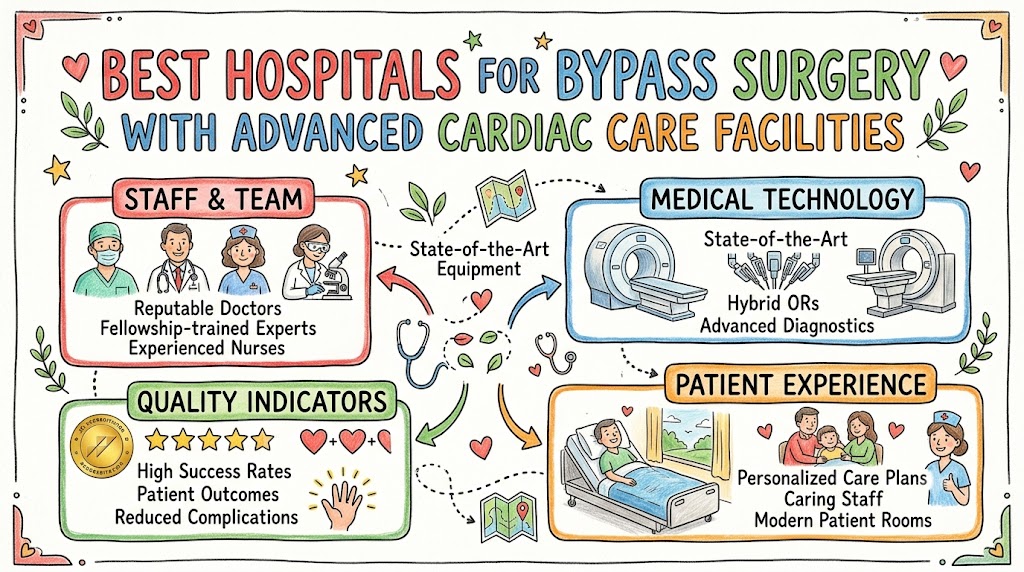
Choosing a hospital for bypass surgery is an important decision that can influence surgical safety, recovery, long-term heart health, and the overall patient experience. Patients should look beyond general hospital reputation and examine the experience of the cardiac surgery team, quality of intensive care, diagnostic technology, infection-control practices, rehabilitation services, emergency support, and treatment planning process.
The best hospitals for bypass surgery usually provide coordinated care through cardiologists, cardiac surgeons, anesthesiologists, intensive care specialists, nurses, physiotherapists, dietitians, and rehabilitation professionals. This multidisciplinary approach helps patients receive appropriate care before, during, and after coronary artery bypass grafting.
No hospital is automatically the best choice for every patient. The most suitable hospital depends on the patient’s coronary artery disease, age, overall health, surgical risk, financial circumstances, location, and recovery needs.
Understanding Coronary Artery Bypass Surgery
Coronary artery bypass grafting, commonly called CABG or bypass surgery, is performed to improve blood flow to the heart muscle. During the procedure, a surgeon uses a healthy blood vessel from another part of the body to create a new route around a narrowed or blocked coronary artery. The graft may be taken from the chest, arm, or leg.
Bypass surgery may be considered when coronary artery disease is severe, several arteries are affected, symptoms remain uncontrolled, or the location and complexity of blockages make surgery more suitable than angioplasty. Treatment decisions should be individualized rather than based on one test result alone.
Current coronary revascularization guidance supports a Heart Team approach for complex cases. This means interventional cardiologists, cardiac surgeons, and other specialists jointly review the patient’s condition and discuss the relative benefits and risks of bypass surgery, angioplasty, medication, or another treatment plan.
Conditions That May Lead to Bypass Surgery
A cardiologist or cardiac surgeon may recommend further evaluation for CABG when a patient has:
- Significant narrowing in several coronary arteries
- Complex multivessel coronary artery disease
- Important left main coronary artery disease
- Diabetes combined with disease in multiple vessels
- Persistent chest pain despite appropriate medication
- Blockages that are difficult to treat with angioplasty
- Previous stent treatment that has not provided sufficient benefit
- Reduced heart function associated with coronary artery disease
- An emergency cardiac condition requiring surgical revascularization
These factors do not automatically mean that surgery is necessary. The final decision should be based on coronary angiography, heart function, symptoms, medical history, surgical risk, and specialist assessment.
What Defines the Best Hospitals for Bypass Surgery?
A leading cardiac hospital is not defined by advertising, building size, or a single surgeon’s reputation. Patients should assess the complete care system surrounding the operation.
1. Experienced Cardiac Surgery Team
The hospital should have qualified cardiac surgeons with substantial experience in coronary artery bypass procedures. Patients may ask about:
- The surgeon’s qualifications and specialist training
- Experience with routine and high-risk CABG procedures
- Familiarity with complex or repeat bypass operations
- Experience treating patients with diabetes, kidney disease, or reduced heart function
- Availability of other surgeons if urgent support is required
- How surgical outcomes are reviewed and improved
The surgeon should clearly explain why bypass surgery is being recommended, which vessels may be grafted, what approach is planned, and what risks are particularly relevant to the patient.
2. Multidisciplinary Heart Team
Advanced cardiac hospitals generally use a collaborative treatment model. The Heart Team may include:
- Clinical cardiologists
- Interventional cardiologists
- Cardiothoracic surgeons
- Cardiac anesthesiologists
- Critical care specialists
- Radiologists and imaging professionals
- Perfusionists
- Cardiac nurses
- Physiotherapists
- Dietitians
- Rehabilitation specialists
This structure is especially valuable when patients have complex blockages or several possible treatment options.
3. Advanced Cardiac Diagnostic Facilities
Accurate diagnosis and surgical planning are essential. A well-equipped cardiac hospital may provide:
- Coronary angiography
- Echocardiography
- Electrocardiography
- Cardiac stress testing
- CT coronary angiography where appropriate
- Intravascular imaging or physiological assessment in selected cases
- Blood and kidney-function testing
- Lung-function assessment
- Carotid artery evaluation for selected patients
Advanced technology is useful only when experienced specialists interpret the findings correctly and apply them to the individual patient.
4. Dedicated Cardiac Operation Theatres
CABG should be performed in an operating environment designed for complex heart surgery. Important capabilities may include:
- Modern cardiac anesthesia equipment
- Cardiopulmonary bypass systems
- Continuous hemodynamic monitoring
- Transesophageal echocardiography when required
- Blood-management systems
- Backup equipment and emergency power
- Strict sterilization and infection-control protocols
- Immediate access to laboratory and blood-bank services
Patients do not need to understand every machine, but they should confirm that the hospital routinely performs cardiac surgery and has systems for managing unexpected complications.
5. Specialized Cardiac Intensive Care
After surgery, patients are usually transferred to a cardiac surgical intensive care unit. The quality of this unit is an important part of hospital selection.
A capable cardiac ICU should provide:
- Continuous heart rhythm monitoring
- Ventilator and respiratory support
- Blood pressure and circulation monitoring
- Pain management
- Kidney-function observation
- Early identification of bleeding or infection
- Rapid treatment of rhythm abnormalities
- Round-the-clock critical care staff
- Immediate access to the surgical team
The hospital should also have a clear process for transferring patients from intensive care to a monitored cardiac ward.
Essential Hospital Facilities to Compare
| Area of care | What patients should evaluate |
|---|---|
| Cardiac surgery | Surgeon qualifications, CABG experience and complex-case capability |
| Cardiology | Heart Team review and access to interventional cardiology |
| Diagnostics | Angiography, echocardiography and comprehensive preoperative testing |
| Operation theatre | Cardiac-specific equipment, anesthesia and emergency backup |
| Intensive care | Dedicated cardiac ICU with round-the-clock specialists |
| Blood bank | Reliable blood products and emergency availability |
| Infection control | Sterilization practices and surgical-site infection monitoring |
| Rehabilitation | Supervised cardiac rehabilitation and physiotherapy |
| Emergency care | Rapid response, emergency cardiology and critical care |
| Patient support | Counselling, cost estimates, follow-up and caregiver education |
Types of Bypass Surgery Facilities a Hospital May Offer
Conventional On-Pump CABG
In conventional bypass surgery, a heart-lung machine temporarily supports circulation while the surgeon creates the grafts. This remains a common approach and may be suitable for many patients.
Off-Pump Bypass Surgery
Off-pump CABG is performed while the heart continues beating. It may be considered for selected patients, depending on coronary anatomy, surgical requirements, and the surgeon’s expertise.
Off-pump surgery is not automatically safer or better for everyone. The choice should be based on the patient’s condition and the surgical team’s experience.
Minimally Invasive Bypass Surgery
Some carefully selected patients may be candidates for bypass surgery through smaller chest incisions. Minimally invasive heart surgery may avoid dividing the breastbone, but it is not appropriate for every blockage pattern or patient.
Hybrid Coronary Revascularization
Certain advanced centres may offer a combination of minimally invasive bypass surgery and coronary stenting. This is generally reserved for selected cases after multidisciplinary assessment.
Safety Standards and Outcome Transparency
Patients should ask how the hospital measures quality. Useful indicators may include:
- Operative mortality
- Stroke following surgery
- Reoperation for bleeding
- Surgical-site infection
- Kidney complications
- Length of intensive care and hospital stay
- Unplanned readmission
- Patient survival and recovery
- Participation in formal quality-improvement programmes
Statistics must be interpreted carefully. A hospital treating many critically ill or high-risk patients may appear to have different outcomes from a centre handling mostly routine cases. Risk-adjusted data are more meaningful than isolated percentages.
Patients should also be cautious when a hospital promises guaranteed success. Every major heart operation carries risks, and responsible medical teams discuss these honestly.
Infection Prevention and Blood Management
Infection prevention is particularly important in heart surgery because the chest incision, graft-harvesting site, intravenous lines, and breathing support can create possible routes for infection.
Patients may ask whether the hospital follows protocols for:
- Preoperative skin preparation
- Blood-glucose control
- Timely preventive antibiotics
- Operation-theatre sterilization
- Wound monitoring
- Hand hygiene
- Screening for infection risks
- Early removal of unnecessary tubes and lines
Blood-management programmes are also valuable. These may include correcting anemia before planned surgery, reducing unnecessary blood loss, and using transfusions according to clinical need.
Cardiac Rehabilitation and Long-Term Recovery
Successful bypass treatment does not end when the patient leaves the operating theatre. Recovery support is a major feature of advanced cardiac care.
A comprehensive programme may include:
- Early movement and breathing exercises
- Physiotherapy during hospitalization
- Wound-care guidance
- Medication education
- Nutrition counselling
- Smoking-cessation support
- Diabetes and blood-pressure management
- Emotional and psychological support
- Supervised exercise
- Scheduled cardiology and surgical follow-up
Recovery time varies according to the surgical approach, age, fitness, complications, and other medical conditions. Many patients gradually resume normal activities over several weeks, while complete recovery after conventional CABG may take approximately two to three months. Individual instructions from the treating team should always take priority.
A 2026 American Heart Association scientific statement emphasizes that long-term results after CABG depend on continued preventive treatment, cholesterol management, rehabilitation, healthy weight, psychological support, and coordinated follow-up care.
Evaluating the Best Cardiac Surgeons
When comparing the best cardiac surgeons in India or elsewhere, patients should not rely only on online reviews or promotional claims. Consider:
- Recognized training in cardiothoracic surgery
- Experience with the patient’s specific condition
- Number and complexity of CABG cases managed
- Hospital privileges and team support
- Clear explanation of treatment options
- Willingness to discuss risks and alternatives
- Availability during postoperative recovery
- Communication with the patient’s cardiologist
- Participation in outcome review and continuing education
A good surgeon should encourage informed decision-making and should not pressure the patient into an immediate elective procedure without adequate explanation.
Important Questions to Ask Before Admission
Patients and caregivers can prepare the following questions:
- Why is bypass surgery recommended in this case?
- Are medication or angioplasty reasonable alternatives?
- How many grafts may be required?
- Which blood vessels are likely to be used?
- Will the procedure be on-pump, off-pump, or minimally invasive?
- What are the patient’s individual surgical risks?
- How frequently does the surgeon perform this procedure?
- What cardiac ICU facilities are available?
- What happens if an unexpected complication occurs?
- How long is the expected hospital stay?
- Is cardiac rehabilitation included?
- What follow-up is provided after discharge?
- What is included in the written cost estimate?
- Which warning signs require urgent medical attention?
Understanding Bypass Surgery Costs
The total price of bypass surgery can vary significantly between hospitals and patients. The heart surgery cost in India or another destination may depend on:
- Number and complexity of grafts
- Planned surgical technique
- Surgeon and anesthesia fees
- Preoperative investigations
- Operation-theatre charges
- Cardiac ICU stay
- Room category
- Medicines and medical supplies
- Blood products
- Treatment of additional medical conditions
- Complications or extended hospitalization
- Rehabilitation and follow-up
- Travel and accommodation for international patients
Patients should request an itemized written estimate rather than relying on a starting price. They should ask which services are included, which are excluded, and how additional ICU days or complications would be billed.
The lowest estimate may not represent the best overall value. Surgeon experience, intensive care, emergency backup, infection control, rehabilitation, and continuity of care should remain central to the decision.
Medical Tourism for Bypass Surgery in India
India is considered by some international patients because of its specialist cardiac centres, English-speaking medical teams, and differences in treatment costs. However, medical travel for major heart surgery requires careful planning.
International patients should verify:
- Hospital accreditation
- Surgeon credentials
- Written treatment plan
- Visa and travel requirements
- Fitness to fly before and after surgery
- Expected length of local stay
- Accommodation for a caregiver
- Medication availability after returning home
- Communication with the home-country doctor
- Management of complications after travel
- Access to remote or in-person follow-up
Long-distance travel should occur only when the treating doctor confirms that it is medically safe.
Warning Signs After Bypass Surgery
Patients should follow the discharge instructions provided by their own clinical team. Urgent medical assessment may be needed for symptoms such as:
- New or worsening chest pain
- Severe shortness of breath
- Fainting or marked weakness
- Fast, slow, or irregular heartbeat with symptoms
- Fever or chills
- Increasing redness, swelling, discharge, or opening of a wound
- Sudden weakness, facial drooping, or speech difficulty
- Significant leg swelling or pain
- Uncontrolled bleeding
- Rapid unexplained weight gain or worsening swelling
Emergency symptoms should not be managed through online advice or delayed while waiting for a routine appointment.
Common Mistakes While Selecting a Bypass Surgery Hospital
Choosing Only by Price
Affordability matters, but bypass surgery requires reliable critical care, experienced staff, infection control, and emergency support.
Depending Only on Online Rankings
Rankings may use different methods and may not reflect the patient’s specific condition. Direct evaluation of relevant services is more useful.
Focusing on One Famous Surgeon
A successful operation depends on an entire team, including anesthesiologists, perfusionists, ICU specialists, nurses, and rehabilitation professionals.
Ignoring Recovery Services
Hospitals without structured rehabilitation or follow-up may leave patients uncertain about exercise, diet, medication, and wound care.
Accepting Guaranteed Outcomes
Responsible hospitals explain expected benefits and possible complications without guaranteeing results.
Frequently Asked Questions
1. Which hospital is best for bypass surgery?
The best hospital is one that matches the patient’s clinical needs and provides an experienced cardiac surgery team, dedicated cardiac ICU, advanced diagnostics, emergency support, infection control, rehabilitation, and transparent outcome information.
2. How should patients compare bypass surgery hospitals?
Patients should compare surgeon experience, Heart Team evaluation, ICU quality, diagnostic services, complication management, rehabilitation, costs, accreditation, and follow-up support.
3. Is CABG better than angioplasty?
Neither treatment is universally better. The choice depends on the number, location, and complexity of blockages, diabetes status, heart function, symptoms, surgical risk, and patient preferences.
4. How long does bypass surgery take?
The duration varies according to the number of grafts, surgical technique, and complexity. The surgical team can provide a case-specific estimate after evaluation.
5. How long does a patient remain hospitalized?
Hospital stay varies with recovery progress, surgical approach, age, and complications. Patients should ask the hospital for an expected range rather than assuming a fixed number of days.
6. Is bypass surgery safe for older adults?
Age alone does not determine eligibility. Doctors consider physical strength, heart function, kidney and lung health, frailty, other diseases, and the expected benefit of surgery.
7. What facilities are essential after bypass surgery?
Important facilities include a dedicated cardiac ICU, continuous monitoring, ventilator support, emergency imaging, laboratory services, blood-bank access, physiotherapy, and experienced critical care staff.
8. Can bypass surgery be minimally invasive?
Some patients may qualify for minimally invasive CABG, but suitability depends on coronary anatomy, number of blocked vessels, general health, and surgical expertise.
9. Does bypass surgery permanently cure coronary artery disease?
CABG improves blood flow but does not eliminate the underlying tendency toward coronary artery disease. Medication, healthy eating, physical activity, smoking cessation, and risk-factor control remain necessary.
10. Is a second opinion useful before bypass surgery?
A second opinion can be valuable in stable, non-emergency cases, particularly when treatment options are unclear or the condition is complex. Emergency care should not be delayed when immediate treatment is medically necessary.
Conclusion
Selecting among the best hospitals for bypass surgery requires a balanced review of clinical expertise, hospital infrastructure, intensive care, safety systems, rehabilitation, communication, and cost transparency. Patients should seek a hospital where a multidisciplinary Heart Team evaluates the case and explains the benefits, risks, alternatives, and expected recovery clearly. Advanced equipment is important, but it is most effective when supported by experienced professionals and coordinated postoperative care. By comparing hospitals carefully, asking detailed questions, and involving trusted doctors and family members, patients can make a more informed decision about their cardiac treatment.