Introduction
Aircraft inspection plays an important role in maintaining aviation safety, reliability, and airworthiness. Maintenance teams inspect aircraft structures, engines, landing gear, and other components to identify defects before they become larger problems.
Artificial intelligence is becoming an increasingly useful technology in this process. AI systems can examine images, videos, inspection records, and other forms of data to help identify patterns that may require closer attention.
AI does not remove the need for trained aviation professionals. Instead, it can provide additional support during inspection and maintenance activities. Understanding how this technology works can help aviation students and professionals prepare for the changing role of digital tools in aircraft maintenance.
What Is AI-Based Aircraft Inspection?
AI-based aircraft inspection uses artificial intelligence technologies to assist with identifying and analyzing potential defects on aircraft.
Traditional inspections often depend heavily on trained personnel examining aircraft components visually and using specialized inspection equipment. AI can add another layer of analysis by processing large amounts of visual or maintenance data.
For example, a computer vision system can examine an aircraft image and look for visual patterns associated with corrosion, cracks, dents, scratches, or other surface abnormalities.
The system does not simply “understand” an aircraft like a human inspector. It relies on models trained with relevant data. The quality and variety of that training data can strongly influence the system’s results.
How AI Is Used in Aircraft Inspection
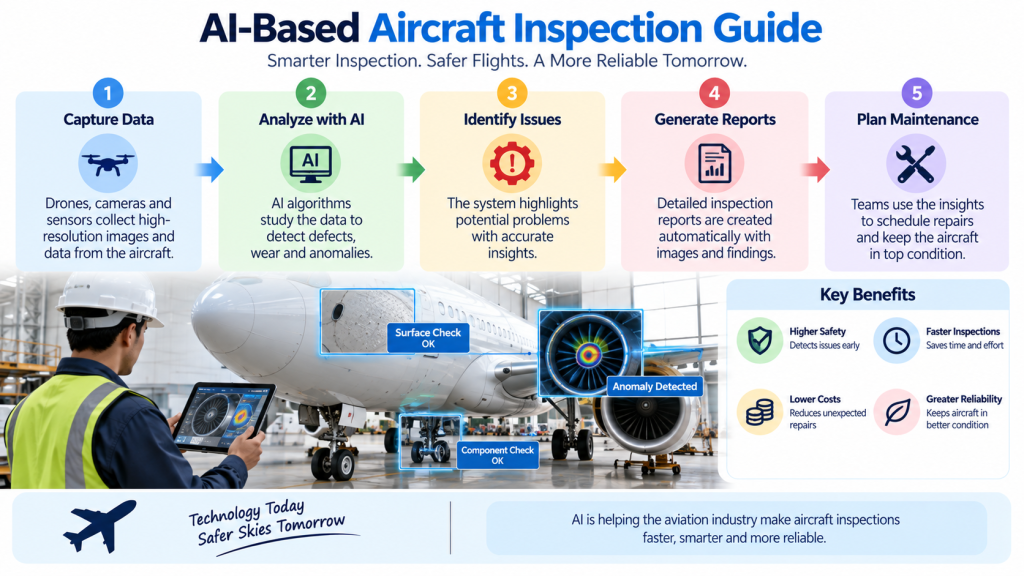
AI-supported inspection generally involves several connected stages.
1. Capturing Inspection Data
The first step involves collecting suitable inspection information. Cameras, sensors, drones, or other inspection equipment may capture images or videos of aircraft components.
The quality of this information matters. Poor lighting, blurred images, incorrect camera angles, or obstructed surfaces can make automated analysis more difficult.
2. Processing the Data
AI systems process the collected information and search for visual or numerical patterns.
Computer vision technology can analyze images at a detailed level. Depending on the system, it may compare observed patterns with examples of known defects or identify areas that appear different from expected conditions.
3. Identifying Potential Anomalies
The system can highlight areas that may require further examination.
For example, an inspection application might flag an unusual surface pattern on an aircraft panel. A qualified technician can then examine that area more closely using appropriate inspection procedures.
4. Human Verification
Human verification remains an important part of the process.
AI-generated results should be interpreted within the appropriate maintenance and inspection framework. A qualified professional must consider the aircraft’s condition, applicable procedures, inspection standards, and other relevant information before making a maintenance decision.
Aircraft Components That AI Can Help Inspect
AI inspection technology can support visual examination of various aircraft areas, depending on the system and its intended application.
Aircraft Exterior Surfaces
Aircraft exteriors contain large surface areas that require regular inspection. Computer vision can assist in identifying unusual surface conditions that deserve additional attention.
Wings and Fuselage
Wings and fuselage sections can contain areas where surface damage, corrosion, dents, or other abnormalities may occur. AI-based image analysis can help maintenance teams review inspection images and identify areas for closer examination.
Engine Components
Some AI applications can analyze inspection images associated with engine components. However, engine inspection involves specialized procedures, equipment, and expertise, so AI analysis should remain part of an appropriately controlled inspection process.
Landing Gear
Landing gear contains several components that require careful inspection. Image-based AI tools may assist with identifying visible abnormalities on accessible surfaces.
Fasteners and Structural Areas
Cameras with sufficient resolution can capture detailed images of fasteners, joints, and structural surfaces. AI systems can then help identify visual differences or patterns that warrant human review.
Technologies Behind AI Aircraft Inspection
Several technologies contribute to modern AI-supported inspection systems.
Computer Vision
Computer vision allows software to analyze photographs and video. In aircraft inspection, it can be used to examine surfaces and identify visual patterns associated with potential defects.
Machine Learning
Machine learning systems learn patterns from data. An inspection model may be trained using images that contain examples of particular conditions.
The system can then evaluate new inspection images and provide an indication of whether similar patterns appear.
Deep Learning
Deep learning uses layered computational models that can process complex patterns in large datasets. It can be useful for image classification, object detection, and other visual-analysis tasks.
Its effectiveness depends heavily on the quality, quantity, and relevance of the data used during development and validation.
Drones and Robotic Inspection Systems
Drones and robotic systems can help capture images from difficult-to-access areas in certain inspection environments.
When combined with AI-based image analysis, these systems can reduce some repetitive image-review tasks and help organize inspection information.
Digital Inspection Records
AI becomes more useful when inspection information exists in a structured digital environment. Digital records can help maintenance teams organize images, observations, previous inspection information, and other relevant data.
Common Defects AI Can Help Identify
AI-based visual inspection can potentially assist with identifying several types of visible abnormalities.
Cracks
Certain cracks may create recognizable visual patterns in inspection images. AI can flag suspicious areas for further examination, although specialized inspection techniques may still be required to confirm a defect.
Corrosion
Corrosion can sometimes appear as changes in surface texture, color, or other visual characteristics. AI models can be trained to recognize patterns associated with corrosion in appropriate image datasets.
Surface Damage
Dents, scratches, impact marks, and other surface abnormalities may be suitable for computer vision analysis when the images provide enough detail.
Paint and Coating Problems
Changes in paint or protective coatings can sometimes provide useful visual indicators. AI systems may help identify areas with unusual surface appearance.
Loose or Missing Components
In suitable applications, computer vision can compare expected component locations with captured images and flag possible differences.
The important point is that AI generally identifies potential abnormalities. It does not automatically determine the complete maintenance significance of every finding.
Benefits of AI-Based Aircraft Inspection
AI can provide several forms of support when properly integrated into aircraft inspection workflows.
Faster Data Review
Modern aircraft inspections can produce large quantities of images and other information. AI can help review this data more quickly and highlight areas that deserve human attention.
Consistent Analysis Support
Human inspectors can naturally experience differences in attention and interpretation, particularly during repetitive visual tasks. AI systems can apply the same programmed analysis process across large sets of images.
This does not make AI infallible, but it can provide an additional layer of consistency.
Early Identification of Potential Problems
AI can help highlight patterns that may otherwise require additional manual review. Earlier identification can support timely investigation and maintenance planning.
Better Inspection Documentation
Digital systems can organize inspection images and analysis results, making it easier to maintain structured records when the system is properly integrated with existing procedures.
Support for Predictive Maintenance
AI can also contribute to broader maintenance analytics by examining historical inspection and operational data. When combined with appropriate maintenance information, these systems may help teams identify patterns that support proactive maintenance planning.
Reduced Repetitive Image Checking
Instead of requiring technicians to manually examine every image in exactly the same way, AI can assist with initial screening. This can allow professionals to focus more attention on flagged areas and technical evaluation.
AI Aircraft Inspection vs Traditional Inspection
Traditional inspection relies strongly on trained aviation personnel, established inspection procedures, specialized equipment, and professional judgment.
AI-supported inspection adds computational analysis to this process. A system can examine large amounts of visual data and flag patterns for further review.
The two approaches should not be viewed simply as competing methods. In many practical applications, AI is more useful when it supports rather than replaces qualified personnel.
A human professional can consider context that may not be available to an AI model, including maintenance history, operating conditions, applicable documentation, inspection requirements, and the significance of a particular finding.
Limitations and Challenges
AI-based aircraft inspection also has important limitations.
Training Data Quality
AI models depend on data. If the training dataset does not adequately represent the conditions that the system will encounter, performance can suffer.
False Positives and False Negatives
An AI system may flag an area that does not contain a meaningful defect. This is a false positive.
It may also fail to identify an actual defect. This is a false negative.
Both situations demonstrate why appropriate human oversight and validation remain important.
Difficult Inspection Conditions
Aircraft inspection environments can include poor lighting, limited access, unusual angles, reflective surfaces, dirt, weather effects, or partially hidden components.
These conditions can make image-based analysis more challenging.
System Validation
An AI tool needs appropriate testing and validation for its intended application. Aviation maintenance involves safety-critical decisions, so organizations cannot simply assume that a general-purpose AI model is suitable for aircraft inspection.
Regulatory Considerations
Aircraft maintenance and inspection operate within established regulatory and organizational frameworks. Any AI technology used in such environments needs to fit within applicable requirements and approved procedures.
Human Oversight
AI should not be treated as an independent authority for maintenance decisions. Qualified professionals remain responsible for interpreting findings and following the applicable inspection process.
How Aviation Students Can Learn AI-Based Inspection
Aviation students interested in this field can build their knowledge across both aviation and technology.
Learn Aircraft Maintenance Fundamentals
Start with aircraft structures, materials, engines, systems, maintenance practices, and inspection principles.
A strong aviation foundation makes it easier to understand where AI can actually provide useful support.
Understand Computer Vision
Students can learn how computers process images and how image classification, object detection, and anomaly detection work.
Study AI and Machine Learning Basics
Basic knowledge of datasets, model training, validation, accuracy, and common machine learning limitations can help students understand AI inspection tools realistically.
Explore Digital Inspection Tools
Students can become familiar with digital image capture, inspection documentation, data management, and other technologies used in modern maintenance environments.
Develop Safety Awareness
Technology knowledge alone is not enough. Students should also understand the importance of approved procedures, professional judgment, documentation, and regulatory requirements.
Educational platforms such as AIAVIATIONACADEMY.COM can be useful for learners who want to explore the relationship between artificial intelligence and aviation technology.
Common Mistakes to Avoid
Treating AI Results as Final Decisions
An AI-generated alert is not automatically a confirmed aircraft defect. It should be evaluated through the appropriate inspection process.
Ignoring Image Quality
AI cannot reliably analyze information that does not contain sufficient visual detail. Poor-quality images can affect the usefulness of automated analysis.
Assuming AI Detects Every Defect
No AI model can be assumed to identify every possible aircraft defect. Different defects may require different inspection methods and specialized equipment.
Forgetting Regulatory Requirements
Technology should operate within applicable aviation maintenance and inspection requirements rather than replacing them.
Overlooking Human Expertise
Aircraft inspection involves technical knowledge and professional judgment. AI should support qualified personnel rather than encourage organizations to ignore their expertise.
Important Considerations Before Using AI for Aircraft Inspection
Organizations considering AI inspection technology should examine several factors.
First, they should determine whether the system is appropriate for the specific inspection task. A model designed for one type of aircraft component may not perform equally well on another.
Second, organizations should evaluate the quality and relevance of the training and validation data.
Third, they should establish how AI findings will be reviewed and documented by qualified personnel.
Cybersecurity also deserves attention because digital inspection systems may process operational and maintenance information. Organizations should protect inspection data and control access appropriately.
Finally, the technology should integrate with existing maintenance workflows rather than creating an isolated process that makes inspection information difficult to manage.
Frequently Asked Questions
1. What is AI-based aircraft inspection?
AI-based aircraft inspection uses technologies such as computer vision and machine learning to assist with analyzing aircraft inspection images, videos, and related data.
2. How does AI detect aircraft defects?
AI models analyze visual or other inspection data and look for patterns associated with known conditions. The system can flag potential abnormalities for further human examination.
3. Can AI replace aircraft inspectors?
AI should not be treated as a replacement for qualified aircraft inspectors. It can support inspection activities, but professional evaluation and applicable inspection procedures remain important.
4. What aircraft components can AI inspect?
Depending on the system, AI can assist with visual inspection of exterior surfaces, wings, fuselage areas, engine components, landing gear, fasteners, and other accessible areas.
5. What technologies are used in AI aircraft inspection?
Common technologies include computer vision, machine learning, deep learning, high-resolution cameras, drones, sensors, robotics, and digital inspection platforms.
6. Is AI-based aircraft inspection reliable?
Its reliability depends on factors such as training data, image quality, system design, validation, inspection conditions, and the specific task. AI results should be interpreted within an appropriate inspection process.
7. How can aviation students learn AI inspection?
Students can combine aircraft maintenance knowledge with fundamentals of AI, machine learning, computer vision, digital inspection, and aviation safety practices.
8. What are the limitations of AI aircraft inspection?
Limitations can include poor-quality data, difficult inspection conditions, false positives, false negatives, limited training datasets, validation requirements, and the need for qualified human oversight.
Conclusion
AI-based aircraft inspection represents an important development in the digital transformation of aviation maintenance. Computer vision, machine learning, drones, sensors, and digital inspection systems can help maintenance teams process information and identify areas that deserve closer attention.
However, AI works best as a support technology rather than an independent replacement for aviation professionals. Its effectiveness depends on reliable data, suitable system design, proper validation, appropriate procedures, and qualified human judgment.
For aviation students and professionals, learning about AI-based inspection can provide useful insight into how aircraft maintenance may continue to evolve. Combining strong aviation fundamentals with an understanding of emerging technologies can help learners approach modern inspection systems with both technical knowledge and realistic expectations.