Introduction: About the Certified DevOps Engineer (CDE) course
The Certified DevOps Engineer (CDE) course is a structured, job-focused program that teaches DevOps the way it is used in real delivery teams. It covers the full journey of software delivery and operations: how code moves from a developer commit to production using CI/CD, how containers and Kubernetes support safer deployments, and how teams monitor, troubleshoot, and improve systems after release.
This course does not teach tools in isolation. Instead, it helps you connect version control, build automation, deployment strategy, monitoring, and reliability into one working delivery system. That is what companies expect from DevOps professionals today: not only “can you use tools,” but “can you deliver and operate reliably.”
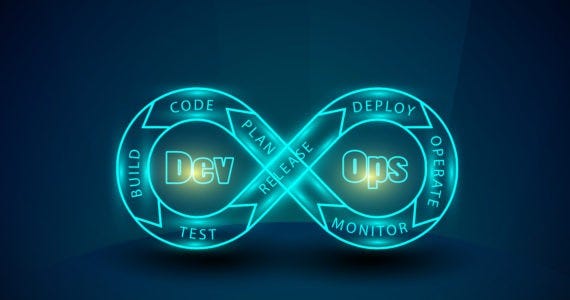
What is Certified DevOps Engineer (CDE)?
The Certified DevOps Engineer (CDE) is a professional certification that validates your ability to work like a real-world DevOps engineer. It proves you can design, automate, deploy, monitor, and improve modern software delivery systems in production environments.
CDE is not about memorizing definitions or listing tools. It focuses on whether you understand the end-to-end DevOps workflow—how to build repeatable pipelines, how to deploy safely, how to observe systems after deployment, and how to respond when failures happen. The certification is designed as an exam program and tests practical knowledge across areas like CI/CD, automation, configuration management, and monitoring.
In simple words, CDE confirms you can take ownership of delivery and operations and support business outcomes with stable, measurable releases.
Who this master guide is for
This master guide is written to help professionals who want a clear, practical understanding of the Certified DevOps Engineer (CDE)—not only what it is, but how it fits into real jobs, real projects, and real career growth. It is designed for readers who prefer simple, direct guidance and want to choose the right certification path with confidence.
- Working software engineers who want to move into DevOps or platform roles
- DevOps engineers who want stronger fundamentals and certification validation
- SRE and platform engineers who want a structured DevOps foundation
- Cloud engineers who want to connect infrastructure with CI/CD and delivery workflows
- Tech leads and engineering managers who want to understand DevOps maturity and reduce delivery risk
Why CDE is relevant for engineers and managers
The Certified DevOps Engineer (CDE) is relevant today because organizations want faster delivery without breaking production. Teams need engineers who can automate workflows, reduce release risk, and keep systems reliable after deployment. Managers also need a shared standard to assess DevOps maturity and build consistent skills across teams.
- Helps engineers prove practical DevOps capability beyond tool knowledge
- Builds confidence in designing reliable CI/CD pipelines
- Improves understanding of production-ready deployment strategies
- Strengthens automation and repeatability in releases
- Encourages monitoring, logging, alerting, and operational readiness
- Supports safer delivery with rollback, recovery, and incident discipline
- Helps managers standardize DevOps skill levels across teams
- Reduces delivery risk by improving system ownership and clarity
- Useful globally because DevOps workflows are universal across industries
Certification overview table
| Certification | Track | Level | Who it’s for | Prerequisites | Skills covered | Recommended order |
|---|---|---|---|---|---|---|
| Certified DevOps Engineer (CDE) | DevOps | Professional | Software Engineers, DevOps Engineers, SREs, Cloud Engineers, Tech Leads, Managers | Basic Linux, Git, scripting; cloud fundamentals recommended | CI/CD, infrastructure automation, configuration management, monitoring, delivery workflows | First professional DevOps certification |
What you actually learn in CDE
CI/CD and release workflow
You learn how code is built, tested, packaged, and released using repeatable pipeline patterns. In real production, a pipeline is not just “automation.” It is a safety system. When the pipeline is designed well, releases become predictable. When it is designed poorly, teams end up firefighting.
Containers and Kubernetes basics
You learn why containers make software portable and consistent across environments. You also learn how Kubernetes supports rollouts, scaling, and stable operations. This matters because many modern teams deploy containerized workloads, and DevOps engineers are expected to understand the basics of operating them.
Infrastructure automation and configuration discipline
You learn the mindset of “if we do it twice, automate it.” This includes infrastructure automation and configuration management thinking. This matters because manual steps do not scale and create hidden risks, especially across multiple environments like dev, QA, staging, and production.
Monitoring and operational readiness
You learn why monitoring, logging, and alerting should exist before a release goes live. This matters because deployment is not the finish line. After deployment, production stability becomes the real responsibility.
Reliability and incident thinking
You learn how to respond when things break: rollback, triage, reading logs, understanding alerts, and basic root-cause thinking. In real jobs, every system fails sometimes. The difference between average and strong engineers is how fast they detect issues and recover cleanly.
Certified DevOps Engineer (CDE): Detailed breakdown
What it is
CDE is a professional certification that validates practical DevOps engineering skills used in real projects. It confirms you understand the full DevOps workflow—from build and release to monitoring, stability, and continuous improvement.
Who should take it
- Software Engineers moving toward DevOps or Platform roles
- DevOps Engineers who want a strong, structured validation
- SREs who want DevOps foundation plus reliability thinking
- Cloud Engineers expanding into delivery pipelines and automation
- Tech Leads and Engineering Managers who want system-level clarity
Skills you’ll gain
- CI/CD pipeline design, improvement, and troubleshooting
- Git-based collaboration and release workflows
- Containerization fundamentals and best practices
- Kubernetes basics for deployment and operations
- Deployment strategies (rolling, blue-green) and rollback planning
- Infrastructure automation and configuration management thinking
- Monitoring, logging, alerting, and observability basics
- Incident handling basics and root-cause analysis mindset
Real-world projects you should be able to do after it
- Build an end-to-end CI/CD pipeline from commit to production
- Containerize an application and run it consistently across environments
- Deploy applications on Kubernetes using safe deployment strategies
- Create monitoring dashboards and alert rules for production readiness
- Implement a rollback plan and handle failed deployments cleanly
- Automate repetitive tasks and improve release repeatability
- Document a delivery workflow that teams can follow and scale
Preparation plan (7–14 days / 30 days / 60 days)
7–14 days (fast-track for experienced engineers)
Best for professionals already working on CI/CD, cloud, or Kubernetes.
- Revise the end-to-end DevOps lifecycle and typical pipeline stages
- Practice one complete pipeline flow: build → test → deploy → monitor
- Review Kubernetes and containers with a “day-2 operations” mindset
- Focus on failure scenarios: rollback, alerting, troubleshooting
30 days (ideal for most working professionals)
Best balance of speed and depth for working engineers.
- Week 1: DevOps fundamentals, Git workflows, CI/CD concepts
- Week 2: Containers, Kubernetes, deployment patterns
- Week 3: Monitoring, logging, automation and operational readiness
- Week 4: Practice full projects, revise weak areas, mock scenarios
60 days (best for career switchers or beginners)
Best for those transitioning into DevOps from development, QA, or support.
- Month 1: Linux, Git, scripting basics, CI/CD foundations, cloud basics
- Month 2: Containers, Kubernetes, monitoring, automation, real projects
Common mistakes
Many people prepare for CDE with good effort, but they struggle because they learn tools separately instead of thinking like a DevOps engineer who owns delivery end-to-end. CDE expects practical workflow understanding—how things work in real projects, including failure handling and production readiness.
- Learning CI/CD, containers, and Kubernetes as isolated tools, not as one connected delivery pipeline
- Skipping monitoring, logging, alerting, and post-deployment responsibility
- Not practicing rollback, recovery, and “what if deployment fails” scenarios
- Memorizing concepts instead of building at least one end-to-end CI/CD project
- Ignoring access control, secrets handling, and basic security hygiene
- Underestimating troubleshooting, root-cause thinking, and incident discipline
- Not documenting the workflow (teams value clarity, not just execution)
Best next certification after this
After CDE, the best next step is not “more certificates.” The best next step is choosing a direction and going deeper. If you pick one path and build real projects, your profile becomes clear, strong, and interview-ready.
Choose your path: 6 learning directions after CDE
1) DevOps path
This path is for engineers who want to become senior DevOps professionals and own delivery platforms. You focus on advanced CI/CD patterns, infrastructure automation, platform delivery maturity, and production operations at scale.
2) DevSecOps path
This path is for engineers working in regulated industries or teams handling security-sensitive environments. You focus on secure pipelines, scanning discipline, secret management, access control, and policy-driven delivery.
3) SRE path
This path is for engineers who live close to production. You focus on reliability ownership, incident response discipline, measurable SLIs/SLOs, and building systems that fail gracefully.
4) AIOps / MLOps path
This path is for teams using advanced observability and automation, or running ML workloads. You focus on intelligent monitoring, alert noise control, automation-driven operations, and ML pipeline delivery basics.
5) DataOps path
This path is for data engineers and analytics platform teams. You focus on data pipeline reliability, testing discipline, orchestration, reproducibility, and safer data releases.
6) FinOps path
This path is for engineers and managers who want cost visibility and control in cloud environments. You focus on cost governance, optimization, accountability, and engineering-finance collaboration.
Role → Recommended certifications mapping
| Role | Recommended certifications (after or alongside CDE) |
|---|---|
| DevOps Engineer | CDE → Advanced DevOps / Kubernetes / Platform specialization |
| SRE | CDE → SRE specialization (reliability + incidents) |
| Platform Engineer | CDE → Kubernetes + platform architecture path |
| Cloud Engineer | CDE → cloud specialization + FinOps basics |
| Security Engineer | CDE → DevSecOps specialization |
| Data Engineer | CDE → DataOps specialization |
| FinOps Practitioner | CDE → FinOps specialization |
| Engineering Manager | CDE → architecture / leadership-focused programs |
Next certifications to take after CDE
After Certified DevOps Engineer (CDE), your next certification should match what you want to become in the next 6–18 months. CDE gives you a strong base, so the next step should either deepen your DevOps skill, add one specialization, or move you toward architecture and leadership.
- Same track (deepen DevOps): Choose Kubernetes/Platform Engineering or an Advanced DevOps program so you can handle larger systems, complex delivery workflows, and stable production operations.
- Cross-track (add specialization): Pick DevSecOps (secure delivery), SRE (reliability ownership), FinOps (cloud cost governance), DataOps (data pipeline discipline), or AIOps/MLOps (intelligent operations).
- Leadership track (move up roles): Choose DevOps Architect or Platform Architect learning if you design systems, lead teams, own delivery risk, or want to grow into management responsibilities.
Certification directions software engineers commonly choose
You asked to align this guide with the “top certifications for software engineers” direction. A practical way to read that guidance is: software engineers usually grow by picking one of these directions and building proof through projects. GurukulGalaxy’s lists commonly highlight tracks around DevOps, SRE, DevSecOps, containers/Kubernetes, microservices, AI/ML, big data, AIOps, and DataOps-style paths.
1) Delivery and platform direction
If you want to own release platforms and pipelines, CDE is your base. Then you go deeper into Kubernetes and platform engineering. This direction is popular because it maps directly to how modern teams ship software.
2) Reliability direction
If your work is close to production stability, you pair DevOps foundation with SRE practices. This direction is valuable because reliability is measurable and business-critical.
3) Security direction
If your org is security sensitive, DevSecOps becomes the natural next step. This direction improves your ability to build secure delivery systems, not just fast systems.
4) Data and AI direction
If you work with data platforms or ML systems, you pair DevOps discipline with DataOps or AIOps/MLOps thinking. This direction is common as teams operationalize analytics and ML in production.
5) Microservices and cloud-native direction
If you build distributed systems, microservices and containerization become key. That is why container and Kubernetes skills show up repeatedly in “top certification” discussions.
6) Leadership direction
If you already lead teams, certifications matter less than your system design decisions. Still, structured learning in architecture and governance helps you scale DevOps practices across multiple teams.
Institutions supporting CDE training and certification
Preparing for the CDE certification becomes easier when you learn from institutions that provide a clear syllabus, hands-on labs, real project practice, and mentor guidance. This support matters most for working professionals because it reduces confusion and speeds up practical readiness.
- DevOpsSchool
Offers structured DevOps learning with hands-on practice, real project thinking, and certification readiness aligned with delivery workflows. It is useful for professionals who want practical confidence, not only theory. - Cotocus
Supports DevOps learning with an enterprise implementation mindset. Helpful for professionals and teams who want DevOps aligned to real business delivery outcomes. - Scmgalaxy
Provides learning support around SCM and DevOps foundations. Useful for learners who prefer step-by-step structure and consistent practice habits. - BestDevOps
Focuses on skill-building for working professionals and practical DevOps workflow clarity, especially around automation and delivery practices. - devsecopsschool.com
Security-first DevOps learning focus, useful for engineers working in regulated environments or teams that must integrate security into pipelines. - sreschool.com
Reliability and production operations learning focus, useful for engineers moving toward incident discipline, SLIs/SLOs, and reliability ownership. - aiopsschool.com
Intelligent operations and automation-driven monitoring focus, useful for teams adopting advanced observability and operational automation. - dataopsschool.com
DataOps practices for reliable data delivery, useful for data engineering teams working on orchestration, testing discipline, and reproducibility. - finopsschool.com
Cost governance and cloud optimization focus, useful for engineers and managers who want cost visibility and accountability in cloud usage.
FAQs on Certified DevOps Engineer (CDE)
Below are 12 FAQs. The first 8 are focused CDE questions, followed by 4 additional common questions.
1) How difficult is the CDE certification?
It is moderate. If you understand DevOps workflows and can build a basic CI/CD pipeline project, it becomes manageable.
2) How much time do I need to prepare for CDE?
Most working professionals do it in 30 days. Experienced engineers can do it in 7–14 days with focused practice.
3) What prerequisites are needed before CDE?
Basic Linux, Git, and scripting familiarity are recommended. Cloud and container basics help, but you can learn them during preparation.
4) Is CDE useful for software engineers, or only DevOps engineers?
It is useful for software engineers because it teaches how software reaches production safely and reliably. That knowledge improves both delivery and design.
5) Is CDE valuable for managers?
Yes. It helps managers understand DevOps maturity, reduce delivery risk, and set practical standards for teams.
6) What is the right certification sequence after CDE?
Choose one direction: DevOps depth (Kubernetes/Platform) or specialization (SRE/DevSecOps/FinOps/DataOps/AIOps-MLOps) or leadership (Architect path).
7) Will CDE help in job switching or career growth?
Yes. It gives structure to your DevOps skill set and provides a clear way to explain your capability in interviews and internal role transitions.
8) Does CDE focus only on tools?
No. Tools are part of it, but the main focus is the workflow: automation, deployment safety, monitoring, and operational readiness.
9) Can I prepare for CDE while working full-time?
Yes. A practical plan is 60–90 minutes on weekdays and 3–4 hours on weekends, focused on one end-to-end pipeline project.
10) What kind of project best proves CDE skills?
An end-to-end pipeline: code → build → test → deploy (containers/Kubernetes) → monitor → rollback handling.
11) What are common reasons people struggle?
Lack of hands-on practice, skipping monitoring/rollback topics, and studying tools separately without connecting them into a workflow.
12) What career roles can CDE support?
DevOps Engineer, Platform Engineer, Cloud Engineer, and a strong foundation for SRE/DevSecOps/FinOps directions.
Final thoughts from a 20-year practitioner
After nearly two decades working across delivery and operations teams, one thing is consistent: DevOps is ownership, not titles or tools. Strong DevOps engineers understand systems end to end and stay responsible after release—automation, stability, monitoring, and recovery.
The Certified DevOps Engineer (CDE) helps you build that mindset. It moves you from “I know a few tools” to “I can run a complete DevOps workflow in real projects.” My advice is simple: use CDE preparation to build one full end-to-end pipeline project you can explain clearly. That single proof creates career value far beyond the certificate.